










Table of Contents
Tea oil is not like coffee oil. Coffee oil washes out with hot water and a simple detergent. Tea oil bonds to surfaces. Over weeks of use, a tea brewer that hasn’t been properly cleaned develops a layer of residue that changes the flavor of every cup. Regular tea brewer cleaning is the only way to ensure the tea doesn’t taste dull and the aroma stays fresh.
This guide covers the three levels of tea brewer cleaning: daily, weekly, and monthly. The frequency depends on your volume, but the principles are the same.
Daily Tea Brewer Cleaning: What You Can’t Skip
The daily clean takes 10 minutes. It covers the surfaces that touched tea during the day.
Empty and rinse the tea bucket. Remove the brewed tea leaves or filter bag. Rinse the bucket with hot water (70°C+, not boiling) until the water runs clear. Tea oil is soluble in hot water but not cold. Cold water rinses just push the oil around.
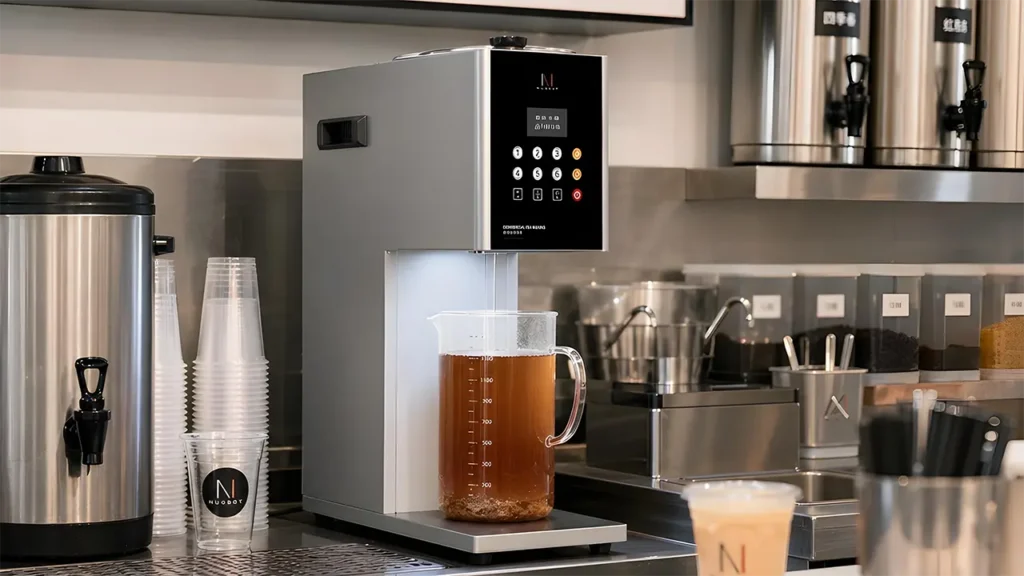
Flush the dispensing nozzle. Most tea brewers have a manual or automatic flush cycle. Run it. If your machine doesn’t have one, remove the nozzle and soak it in hot water for 5 minutes. A clogged nozzle changes the flow rate, which changes the contact time between water and tea leaves, which changes the extraction.
Wipe the exterior. Tea splashes during brewing. Wipe down the machine body with a damp cloth. Pay attention to the area around the tank lid and the touchscreen if your machine has one. Dried tea residue on the touchscreen can interfere with the capacitive sensors over time.
Leave the lid open. After cleaning, leave the tank lid and the brewing chamber lid open. Trapped moisture is the main cause of mold growth inside tea brewers. A machine that’s sealed shut after tea brewer cleaning will develop an odor within three days.
Weekly Tea Brewer Cleaning and Deep Surface Care
The weekly clean takes 30 minutes. It targets the tea oil buildup that daily cleaning doesn’t fully remove.
Descaling solution soak. Fill the tank with water and add a commercial descaling solution at the manufacturer’s recommended concentration. Let it sit for 20 minutes. Run the solution through the brewing cycle. Drain. Run two full cycles of fresh water to flush out the descaler residue.
Not all descaling solutions are the same. Citric acid-based descalers are effective against mineral scale but less effective against tea oil. When performing your weekly tea brewer cleaning, look for descalers labeled for tea equipment specifically.
Clean the filter screens. Remove the intake and outlet filter screens. Soak them in warm water with a mild detergent. Scrub gently with a soft brush. Tea particles get trapped in the screen mesh and decompose over time, creating a bitter off-flavor that gets washed into subsequent brews.
Check the spray head. If your tea brewer uses a spray head to distribute water over the tea leaves, remove it and inspect the holes. Hard water deposits or tea particles can clog individual holes, causing uneven water distribution. An uneven spray means some tea leaves get over-extracted while others are under-extracted. Clean with a pin or brush.
Monthly Tea Brewer Cleaning: The Full Disassembly
The monthly clean takes 60-90 minutes. This is the one most shops skip, and it’s also the one that makes the biggest difference to long-term tea quality.
Descale the internal boiler. Mineral scale accumulates inside the boiler, reducing heating efficiency and creating off-flavors. The scale acts as an insulator, so the heating element runs hotter to maintain temperature, which accelerates wear. A boiler that’s 3mm thick with scale draws 15-20% more power and heats 30% slower than a clean boiler.
For the descaling procedure: drain the boiler completely, fill with descaling solution at double the normal concentration, let it sit for 30 minutes (not 20), drain, and flush with fresh water for two full tank cycles. If your machine has a dedicated boiler drain valve, use it. If not, run the solution through the brewing cycle.
Deep clean the tea bucket. Take the tea bucket out and soak it in warm water with a food-grade cleaner for 30 minutes. Use a non-abrasive sponge. Scratches in the bucket surface create hiding spots for bacteria.
Inspect and replace seals. The rubber seals around the tank lid and brewing chamber wear over time. A worn seal lets air in, which drops the temperature inside the brewing chamber by 2-4°C. For tea brewing, 2°C is the difference between a properly extracted oolong and a flat, under-extracted one. Check for cracks, hardening, or deformation. Replace any seal that doesn’t sit flush.
Clean the drain line. The drain line is the most neglected part of any tea brewer. Tea leaves and sediment settle at the lowest point of the drain pipe and decompose. The decomposition produces a musty smell that gets pulled back into the brewing chamber when the machine runs its next cycle. Pour a cleaning solution through the drain line and flush with hot water.
One More Thing: The Water Quality Factor
Hard water accelerates every cleaning problem. Scale forms faster, tea oil bonds more stubbornly, and residue buildup in the boiler happens in weeks instead of months.
A water softener or reverse osmosis system installed at the supply line reduces all three tea brewer cleaning frequencies by about 40%. The descaling interval shifts from monthly to every six to eight weeks. The spray head clogs less frequently. The internal boiler stays clean longer.
If you’re in an area with hard water (above 180 ppm total dissolved solids), a water treatment system pays for itself within a year through reduced cleaning labor and extended equipment life. You can learn more about commercial water quality standards to see how mineral content affects beverage equipment.
How to Know It’s Time
The cleaning schedule above is a baseline. Your actual frequency depends on your volume and water quality. Here are the signs that tell you it’s time to clean, regardless of the calendar:
The brew takes longer. If your tea brewer’s cycle time has increased by 10-15% since installation, scale buildup in the boiler is reducing heating efficiency.
The tea tastes flat. If the tea flavor lacks depth compared to when the machine was new, tea oil residue is coating the brewing surfaces.
There’s visible residue. If you can see a film on the inside of the tank or brewing chamber, it’s been too long between cleanings. The visible film is the part you can see. The part you can’t see—inside the boiler and the drain line—is worse.
The machine makes unusual sounds. Gurgling or hissing sounds during the heating cycle indicate scale buildup affecting the heating element. The sound is the water boiling unevenly around scale deposits.
The Bottom Line
A machine that gets a professional tea brewer cleaning daily lasts 5-7 years. One that gets cleaned weekly lasts 8-10 years. One that gets the monthly full disassembly lasts 10-12 years and produces consistently better tea.
Nudof tea brewers like the Shanhe CLPC10A and PanGu PC10A-NX feature automatic cleaning cycles and easy-access brewing chambers for simplified maintenance. Find cleaning guides for your specific model at nudof.com/en/support/.