



Table of Contents
Most equipment brands show you the finished machine. Polished stainless steel, touchscreen lit up, spec sheet in a glossy brochure. What they don’t show you is how it’s made, who’s making it, and what happens when something goes wrong at 7pm on a Friday.
We’re doing something different here. This is what actually happens inside a Nudof factory.
The Nudof Factory by the Numbers
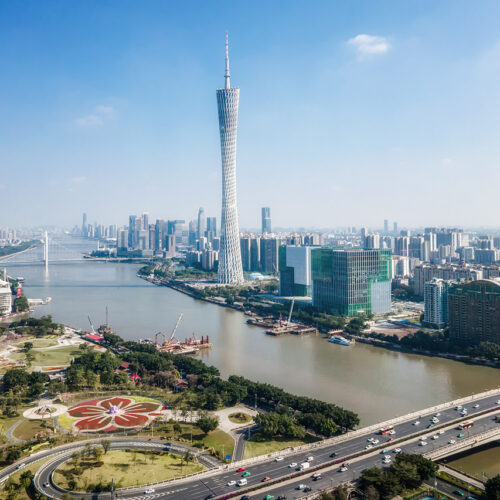
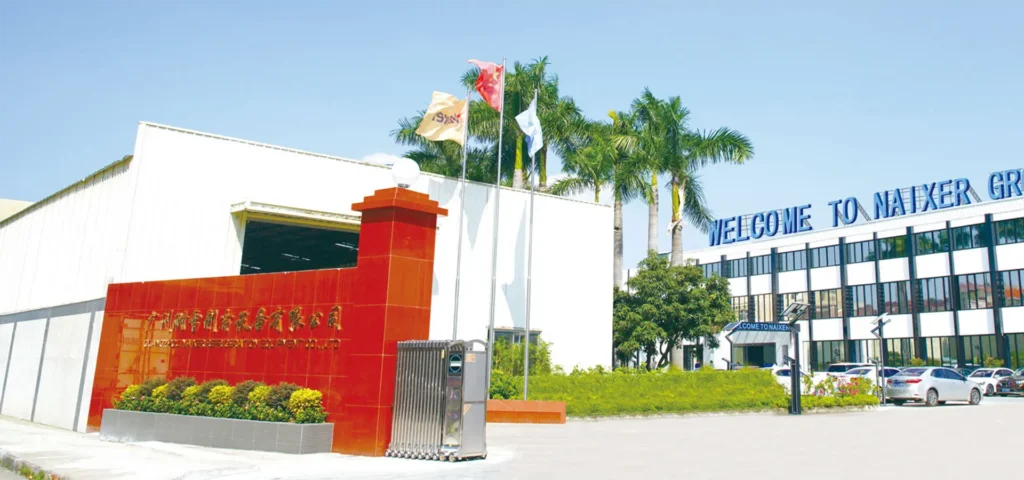
Nudof operates out of a production facility in Guangzhou, China. Annual output: over 10,000 commercial beverage machines across seven product lines: espresso machines, tea brewers, milk tea machines, steam machines, hot water dispensers, extraction machines, and accessories.
The factory runs on a single-shift production model with surge capacity for peak season. That means every machine that leaves the floor was assembled by the same core team, not a rotating third-shift crew. Turnover on the production floor is under 8% annually, which in manufacturing terms is unusually low. The average tenure on the assembly line is four years. These aren’t assembly statistics. They’re quality statistics.
How a Machine Gets Built
Every Nudof machine follows the same assembly logic: modular construction with in-line testing at each stage. Let’s walk through a tea brewer, since it hits all the key manufacturing steps.
Stage 1: Frame and chassis. The stainless steel body panels are laser-cut from 304-grade sheets. Each panel is inspected for edge burr and surface finish before it moves to welding. The chassis is TIG-welded by hand. Robots can do this faster, but a human welder sees things a robot doesn’t: the slight variation in a sheet’s flatness, the micro-gap that’ll become a leak under pressure. Every welded chassis gets a water-tightness test before moving on.
Stage 2: Boiler and water circuit. The boiler is pressure-formed from a single stainless steel blank, which means fewer weld seams and fewer potential leak points. It’s pressure-tested to 1.5 times its rated operating pressure before installation. The water circuit (intake valve, pump, flow meter, heater, dispensing path) is assembled as a sub-unit, tested for flow rate and temperature stability on a dedicated bench, then installed into the chassis as one piece. If a pump or valve fails the bench test, it’s rejected before it ever touches the machine. Catching a bad part at the sub-assembly bench costs ¥200 in replacement parts and 15 minutes. Catching it in a customer’s shop costs a service call, a warranty claim, and a relationship.
Stage 3: Electronics and controls. The main control board, touchscreen display, and sensor harness are assembled and bench-tested before installation. Every temperature probe is calibrated against a reference thermometer in a temperature-controlled water bath. A probe that reads 1°C high at 85°C will produce consistently over-extracted tea at every location where that machine is installed. Our calibration tolerance is ±0.5°C at operating temperature. We check every probe.
Stage 4: Final assembly and full-system test. The assembled machine goes through a complete operating cycle: fill, heat, brew/dispense, drain, clean. Water temperature is verified at the dispensing point, not at the boiler outlet. The boiler might hold 95°C water, but if the dispensing path cools it to 88°C by the time it hits the tea, the machine is wrong regardless of what the boiler sensor says. A complete test cycle takes about 45 minutes per machine. We run it on every unit. No batch sampling.
Stage 5: Packaging. The machine is wrapped in vapor-barrier film with desiccant packs (Guangzhou is humid), seated in custom-cut high-density foam, and double-boxed with a 2cm gap between inner and outer boxes. The outer carton is rated for a 1.5-meter drop on any face. Freight companies aren’t gentle. The packaging has to be.
Quality Control That Doesn’t Just Live in a Brochure
Every factory claims quality control. Here are the specific numbers:
- Incoming material rejection rate: 2.3% across all suppliers in the last 12 months. That means for every 1,000 parts that arrive at the factory, 23 are sent back before they reach the assembly floor.
- In-line defect catch rate: 4.1% of units have at least one component flagged and replaced during sub-assembly testing, before final assembly. This is the number that actually matters. It means we catch problems before they become finished machines with problems.
- Post-assembly first-pass yield: 97.6%. 976 out of 1,000 machines pass the full-system test on the first run. The 24 that don’t go back to the station that caused the issue, get reworked, and get tested again.
- Warranty claim rate (first 12 months): under 1.8%. Industry average for commercial kitchen equipment is 3 to 5%.
Why the Nudof Factory Matters for a Buyer
When you’re comparing equipment from different manufacturers, you’re mostly comparing spec sheets: power rating, capacity, dimensions, features. Those are easy to list and easy to compare. What’s harder to compare is whether a machine rated for 5,000 operating cycles will actually do 5,000 cycles, or whether it’ll develop a slow leak at 2,200 and you’ll spend three days waiting for a response from the supplier’s “technical support,” which turns out to be the salesperson who sold it to you.
None of that shows up on a spec sheet. It shows up six months into ownership. The only way to know it in advance is to understand how the manufacturer builds and tests. A company that tests every machine at full operating cycle before it leaves the floor has a fundamentally different quality commitment than one that tests every tenth machine and trusts the assembly process for the rest.
One More Thing: The Parts Department
Every machine eventually needs a replacement part. A heating element. A pump seal. A gasket. The question is whether you can get it.
Nudof keeps a spare parts inventory covering every active model, going back six years. If you need a boiler gasket for a discontinued model from 2022, it’s on a shelf. If it’s not on the shelf, it’s in production or can be pulled from the current model if compatible. We ship parts within 48 hours of receiving an order. Most equipment manufacturers won’t tell you their parts availability policy. Ask anyway. If they can’t answer within 10 seconds, budget an extra machine for backup or buy from someone who can.
Nudof manufactures commercial beverage equipment from our factory in Guangzhou, China. Every machine we sell has been through a complete operating cycle test before it leaves the building. For spec sheets, production capacity, and lead times: nudof.com.