



Table of Contents
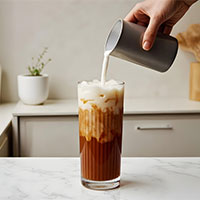
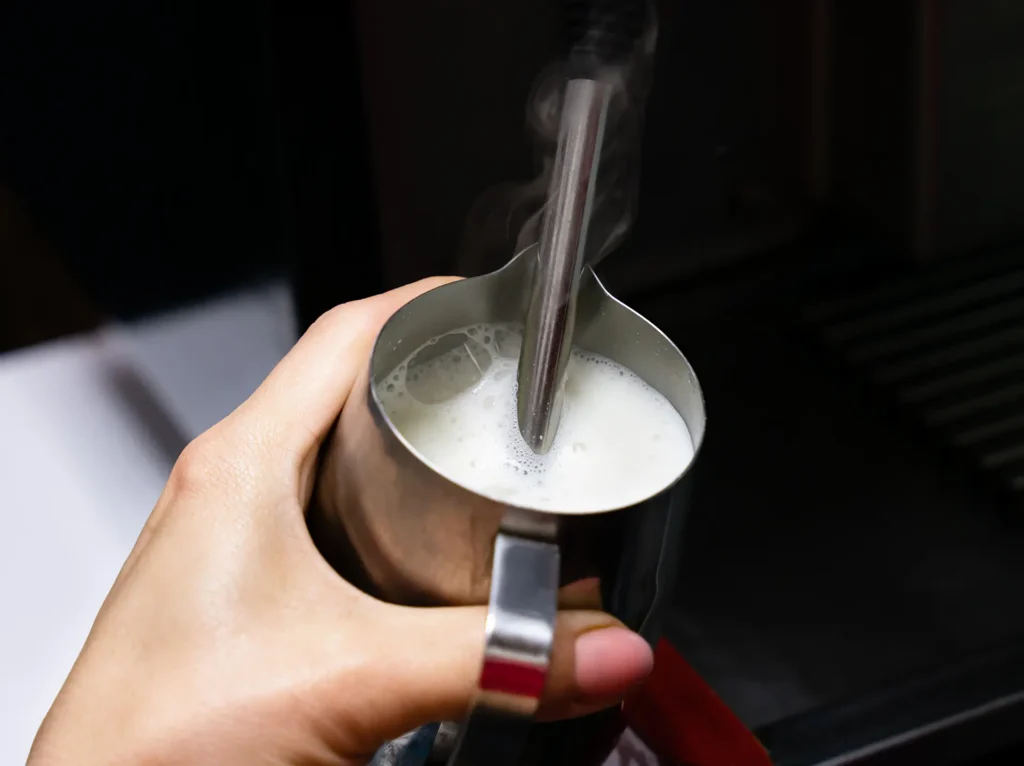
If you’ve worked behind a coffee bar, you know the sound: the hiss of a steam wand folding air into cold milk, the low rumble as the milk spins in the pitcher, the tap-tap-tap on the counter to knock out bubbles. It’s a skill that takes weeks to learn and months to master. And it’s the first thing that goes wrong when a new hire starts, or when volume picks up and the barista has to steam two pitchers at once while shots are pulling and a queue is forming.
The alternative is an automatic milk frother: press a button, it heats and textures the milk, you pour. No skill required. But the texture isn’t quite the same, and the machine costs more and takes up counter space. Here’s how to decide which one your shop needs.
The Steam Wand: Pro-Level Texture, Pro-Level Skill
A manual steam wand (usually built into your espresso machine) gives you total control. You decide how much air to introduce, when to stop aerating, how long to swirl, and what temperature to stop at. The result, in skilled hands, is microfoam with a glossy, paint-like texture that pours latte art and stays silky until the last sip.
What you get: full texture control, no counter space beyond the espresso machine itself, lower equipment cost (it’s already built in).
What it costs you: training time. A new barista needs two to four weeks of regular practice to steam consistent milk for a standard latte. For microfoam suitable for latte art, figure two to three months. During that learning period, you’ll have inconsistent milk texture, occasional scalded milk, and wasted product. At a shop with three full-time baristas and typical turnover, you’re looking at retraining someone roughly every four to six months.
For shops where milk texture is part of the brand (specialty coffee, third-wave cafes, anywhere that serves latte art), a steam wand is non-negotiable. The texture quality justifies the training investment.
The Auto Frother: Consistency Without the Learning Curve
An automatic milk frother is a standalone machine with a built-in heating element, a milk container (often refrigerated), and a dispensing nozzle. You press a button for “hot foam” or “hot milk” and it delivers the same texture every time, regardless of who’s operating it.
What you get: zero training time, identical milk texture across all staff, same-day consistency from new hire to veteran, and the ability to texture milk while someone else uses the espresso machine’s steam wand for something else (like heating alternative milks or making hot chocolate).
What it costs you: ¥3,000 to ¥10,000 for a commercial unit, plus counter space. An auto frother is roughly the size of a large blender and needs its own power outlet. The milk texture is good but not great: creamy and consistent, but without the microfoam density you get from a skilled barista with a steam wand. It works for cappuccinos, lattes, and flat whites. It won’t win you latte art competitions.
There’s also a hybrid option: a dedicated commercial steam machine. Units like the Nudof NDF-ZQ1YW (single-head, A4-sized body, 4L boiler, touchscreen with preset temperature modes) give you professional steam power in a compact standalone unit. This is useful when your espresso machine has only one steam wand but you have two baristas who both need to steam milk simultaneously. Or when you want steam capability at a secondary station (like a drive-through or a second counter) without buying a second espresso machine.
The Decision Framework
Answer three questions:
How many milk drinks do you serve per hour at peak? If it’s under 30, a single steam wand on your espresso machine handles it. If it’s 40 to 60, you need either a dual-wand espresso machine or a second steam source (auto frother or standalone steam machine). Above 60, you need both: auto frother for the volume drinks, steam wand for the specialty ones.
How many people do you train per year? If your turnover is low (one or two new hires annually), the training investment in steam wand skills makes sense. The quality difference pays off in customer loyalty and word of mouth. If you’re training someone new every two months, an auto frother recoups its cost in training time saved and drink consistency maintained during the learning curve.
What’s your brand promise? If your shop positions itself on speed and convenience (airport kiosk, grab-and-go, high-volume chain), an auto frother fits the model. Same drink, every time, anyone can make it. If your brand is built on craft and quality (specialty cafe, destination coffee shop), a steam wand in skilled hands is part of the product.
What a Mixed Setup Looks Like
A realistic setup for a busy mid-market cafe (200 to 300 drinks per day, about 60% milk-based) looks like this:
- Primary: steam wand on a dual-head espresso machine. Used for most standard lattes and cappuccinos by the more experienced barista. Dual-head means two group heads and typically two steam wands, so the second barista can steam while shots pull.
- Secondary: standalone steam machine or auto frother. For the less experienced person on shift, for peak overflow, or for alternative milks (oat, almond, soy) that you don’t want cross-contaminating your main wand. A unit like the Nudof NDF-ZQ1YW (single-head steam, A4 footprint, 4L boiler) adds steam capacity without adding another espresso machine.
- The auto frother decision: add one if you have a high-turnover drinks station (drive-through window, self-serve area, event catering setup) where skill consistency across rotating staff is the priority.
Cost Comparison
| Steam Wand (built-in) | Auto Frother | Standalone Steam Machine | |
|---|---|---|---|
| Equipment cost | ¥0 (built into espresso machine) | ¥5,000-10,000 | ¥3,000-8,000 |
| Training investment | 2-4 weeks per new hire | 10 minutes | 1-2 hours |
| Milk texture quality | Excellent (skilled) / Poor (unskilled) | Good, consistent | Excellent (skilled) / Good (unskilled) |
| Counter space | 0 | 30×30cm | 20×30cm (A4-sized) |
| Best for | Craft cafes, low turnover, 1-2 staff | High turnover, speed-focused, 3+ staff | Adding steam capacity, secondary station |
The Bottom Line
The steam wand versus auto frother choice isn’t really about which one makes better milk. It’s about who’s making the milk. A cafe with stable, skilled staff gets more value from a steam wand. A cafe with rotating staff gets more value from consistency.
If you’re somewhere in between, start with the wand on your espresso machine. It’s already there. Add a standalone steam unit like the Nudof ZQ1YW when peak hour shows you need more steam capacity. Add an auto frother only when you know you need it: when your training pipeline can’t keep up with turnover, or when a secondary station needs milk capability without its own trained barista.
Nudof offers standalone commercial steam machines with touchscreen temperature control and built-in temperature probes, plus dual-head espresso machines with independent steam wands per group. Browse steam and coffee equipment at nudof.com.